Showing posts with label p14. Show all posts

Wednesday, September 17, 2014

FW 1.22 --ALP's bagful of shoes--

[last] [fweb-toc] [fweet] [finwake] [theall] [pgs]


synopsis: leaves of time — four entries from the annals


FDV: "566 ?A.C. On Bell of this year a crone that hadde a wickered kish for to hale turves from the bog lookit under the blay of her kish & found herself full of swalle shoon and. Bluchy works on Hurdlesford." →
"566 B.A. On [Baalfirenacht]{Ballfireeve} of this year a crone that hadde a wickered kish for to hale dead turves from the bog lookit under the blay of her kish as she ran & found herself [rich]{sackvulle} of swart goody quickenshoon & smalie illigant brogues. Bluchy works at Hurdlesford."

AC AC - AD AD →AB BA - OD DO →
AD AD - AD AD

"1132 AB... 566 BA... 566 OD... 1132 DO" hints at reflections within reflections


566 A.D. On Baalfire's eve of this year after deluge

566 is half of 1132, as Eve is half of Adam??
A.D. for Ante Diluvium?? (before flood vs "after deluge")

Danish baal: bonfire

Beltane: ancient Celtic May Day celebration, on which large bonfires were lit on the hills of Ireland (Irish Bealtaine, etymologised as 'Baal's fire')

bale-fire: a great open-air fire (originally, specifically that of a funeral pile)

"year after deluge" ie, one year after?

Madame de Pompadour, mistress of Louis XV: 'After us, the deluge'

postdiluvian?


a crone that hadde a wickered kish for to hale dead turves from the bog

"crone... hale" cf? Kronenhalle: a Zurich restaurant, a favourite of Joyce

AngloIrish kish: wicker basket (for turf)
wicked wish
Kish lightship, Dublin Bay

turf (but how "dead"?)
turds

(she'll resemble the prankquean, below)


lookit under the blay of her kish as she ran

looked

VI.B6.103: 'blay' (does anyone know what this meant?)
Irish Independent 23Jan24: 'McGuires Great Sale Offers': 'Unbleached Twill Sheets. 1,500 pairs of Good Blay Sheets for Single Beds. Sale Price Each... 2/3' (cf 'dito sheets'?)

blay = small freshwater fish

artificial Irish: Baile Atha Cise: Town of the Ford of the Wickerwork (pronunciation 'blaakish') (cf below Baile Atha Cliath: Town of the Ford of the Hurdles = Dublin)

"as she ran" sounds awkward to attempt... why is she running, why can't she stop?


for to sothisfeige her cowrieosity

satisfy
so this
Sothis: Egyptian name of Sirius, Star of Isis; rose at beginning of Egyptian sacred year

German Feige: fig
German slang: Feige: female genitalia
German feige: cowardly

curiosity
cow sacred to Isis
cowrie shells (used as currency in parts of Africa and Asia)


(could she be looking under her dress to see her own genitals???)


and be me sawl but she foun hersell

by my soul
King Saul, son of Kish

found herself (why abbreviated? out of breath??)


sackvulle of swart goody quickenshoon

sackful
chock full
Sackville street, Dublin (now O'Connell)

Norwegian svært gode: mighty good

VI.B3.40: 'Goodytwoshoes'
pantomime Goody Two-Shoes (based on an anonymous 18th century children's story, attributed to Oliver Goldsmith, about a child who was so pleased to get a pair of shoes that she would hold them up to all comers and exclaim 'Two shoes!')


quicken: mountain-ash, rowan-tree
wooden shoes

in the fairy tale The Elves and the Shoemaker, the elves miraculously make lots of shoes


and small illigant brogues, so rich in sweat.

Cinderella hinges on a shoe so small it fits only her

AngloIrish accent: illigant: elegant

AngloIrish phrase: ignorant as a kish of brogues (literally 'ignorant as a basket of shoes')

Finnegan's Wake: 'He'd a beautiful brogue, so rich and sweet'

sweat harms leather


Bluchy works at Hurdlesford.

bluchers: a kind of half-boot, named after General Blücher
cf above: "This is jinnies in the bonny bawn blooches."

Irish Baile Atha Cliath: Town of the Ford of the Hurdles (name of Dublin)


[next]


full pages: 34567891011121314151617181920212223242526272829


Tuesday, September 16, 2014

FW 1.23-24 --Issy mourns Issy--

[last] [fweb-toc] [fweet] [finwake] [theall] [pgs]


a rare instance of authorial square brackets:
FDV: "[Silent]
566 A.D. At that time it came to pass ?that many fair maidens grieved to their minions were ravished of them by an ?ogre Europeus Pius and."
"[Silent]
566 O.D. At that time it came to pass ?that 2 bronzelocked maidens grieved because their minion was ravished of them by an ?ogre Europeus Pius. Bloody wars in [Dublin]{Ballyaughacleeaghbally}."
"O.D." Latin for 'right eye' (not yet overdose)


[Silent]

stage direction?
this seems to be some kind of symmetry point between two very asymmetrical timelines: 1132,566,0,566,1132; E,△,0,⊣⊢, /[

single male, single female, zero, doubled female, doubled male?


Penguin: not indented
FW1: parentheses not square brackets, no italics


566 A.D. At this time it fell out that a brazenlockt damsel grieved

566 x 2 = 1132

siglum: ⊥

"fell out"

FDV: "many" → "2" → "a"

brazen = bold
brazen-locked: having brass-coloured hair

brass padlock
locked up with brass lock/chains
German gelockt: lured; (of hair) curled (past tense of locken)


(Sobralasolas!) because that Puppette her minion

sob
sober
Spanish sobre las olas: over the waves
(why capitalised?)

sigla: ⊣⊢

puppet (imaginary friend?)
German Puppe: doll
Ppt ('Poor pretty thing', Swift's name for Stella in his Journal to Stella) [fweet-33]

French mignon: small and delicately pretty (pronounced 'minion')
Greek slang: mouni: female genitalia


was ravisht of her by the ogre Puropeus Pious.

ravished

"of her" (maybe: her virginity was taken?)

'pia e pura bella': Vico's phrase for the religious wars of his heroic age ('pious and pure wars')

Europe
prepuce?
Greek peos: penis


Bloody wars in Ballyaughacleeaghbally.

bloody (lost virginity)

AngloIrish phrase: bloody wars! (eg LeFanu)

Irish Baile Atha Cliath: Town of the Ford of the Hurdles (name of Dublin; pronounced 'blaaklee')


[next]


full pages: 34567891011121314151617181920212223242526272829


FW 1.25 --Shem and Shaun twins--

[last] [fweb-toc] [fweet] [finwake] [theall] [pgs]


FDV: "1132 A.D. Two sons at one time were born to a goodman & his wife. There were name Primas & Caddy. Primo was a gentleman & came of decent people. Caddy was to Winehouse & wrote a piece of fun. Blooty ?worse in Ballyaughacleeagh." →
"1132 D.O. Two sons at one hour were born to a goodman & his hag. There were name Caddy & Primas, Primas was a sentryman & drilled by dacent people. Caddy went to Winehouse & wrote a peace of farce. Blooty words [in Ballyaughacleeaghbally] {for Dublin}."


the sons must belong to the elderman and the puir old wobban... but then where does the Issies' story fit?


1132 A.D. Two sons at an hour were born until a goodman and his hag.

1132 

Penguin typo: "1132. A.D."

[ Ʌ

archaic until: unto

hag (in Chaucer's Wife of Bath, a hag is transformed into a beauty)
hagwife = midwife


These sons called themselves Caddy and Primas.

not given these names by parents?
French s'appeller: were called (literally 'called themselves')

Caddy/Primas

cadet: younger son or brother
cad

German Primas: archbishop, primate
primal-born: firstborn? eg this Ovid translation


Primas was a santryman and drilled all decent people.

song Saint Patrick was a Gentleman: 'Patrick was a gentleman, and he came from decent people'

Santry: district of Dublin

sentry, drill


Caddy went to Winehouse and wrote o peace a farce.

nursery rhyme 'Taffy came to my house and stole a piece of beef' [wiki]

archaic wine-house: tavern eg
capitalised: a surname, unknown in Ireland

O/A

a farce about ('of') peace? a farce entitled 'o peace'
a piece of verse
FDV: "a piece of fun"


Blotty words for Dublin.

cf U27: "at the foot a crooked signature with blind loops and a blot. Cyril Sargent: his name and seal."

Caddy's words, disfigured by blots (but what of Primas?)


[next]


full pages: 34567891011121314151617181920212223242526272829


FW 1.26a --a gap in the history text--

1.26a: Somewhere, parently, in the ginnandgo gap between antediluvious and annadominant the copyist...
1.26b: A scribicide then and there is led off under old's code with some fine covered by six marks...


[last] [fweb-toc] [fweet] [finwake] [theall] [pgs]


synopsis: the fleeing scribe — the changing times


Somewhere, parently, in the ginnandgoe gap

apparently
patently?
like parents

Ginnungagap: ('mighty gap') in Norse mythology, the primordial abyss between heat and cold that preceded the creation of the world

drink a gin and go?

VI.B6.57: 'gap — copyist hurries away'
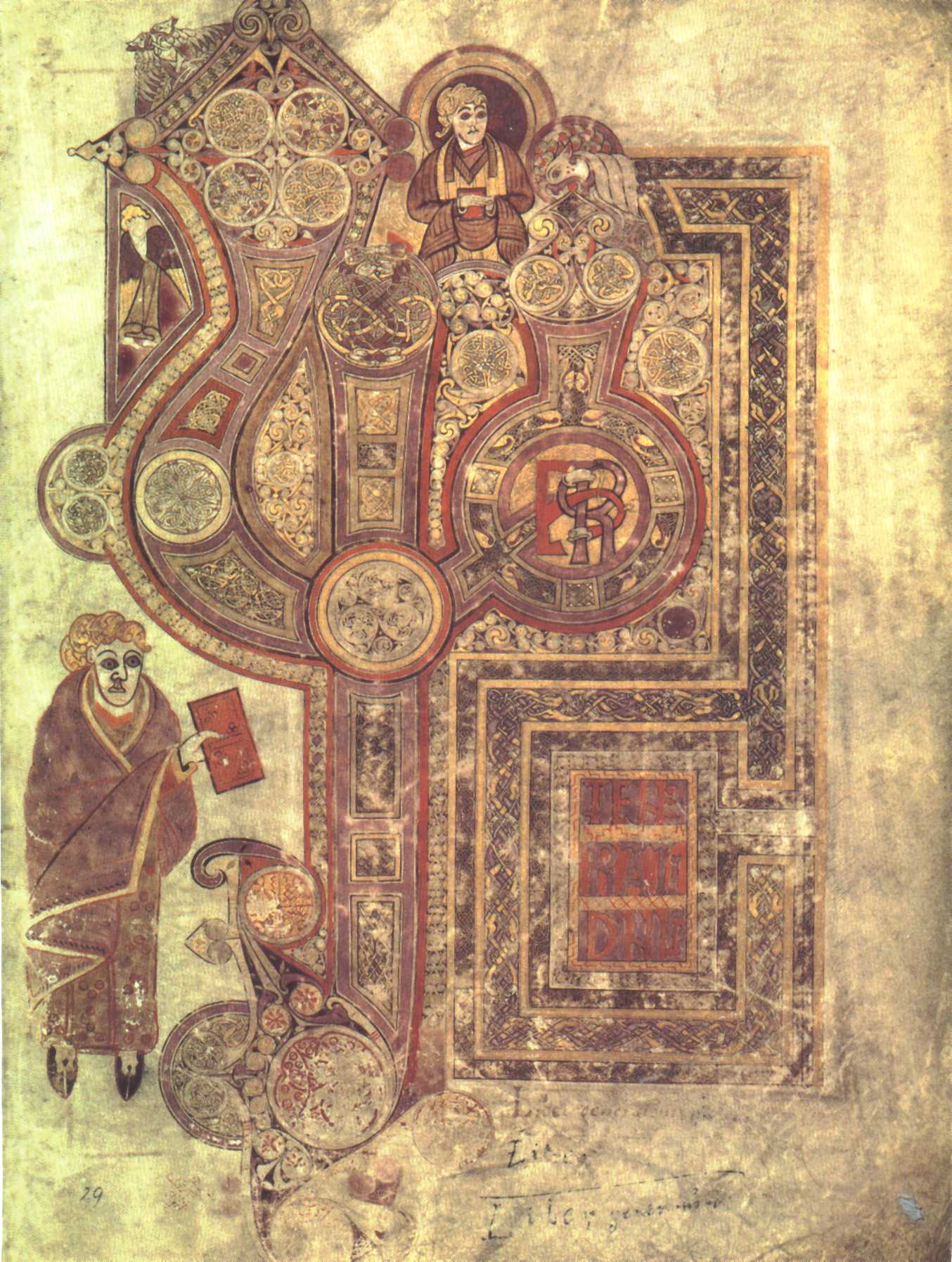
Book of Kells 11: 'the larger figure was a later addition in order to fill a space left vacant when the original artist had touched the Manuscript for the last time... we can almost see from the illumination itself the very place where he was hurried from his work' [image] Sullivan suspects a 2nd, inferior artist for parts of this image


between antediluvious and annadominant

between AD-meaning-1 and AD-meaning-2?

antediluvian

Latin Anno Domini: in the year of the Lord
Anna


the copyist must have fled with his scroll.

"must" is surprisingly strong

Book of Kells 4: 'The last few leaves of the Manuscript... have been missing for many years' (not a scroll, presumably, and it sounds like they were finished and long survived the copyists)


The billy flood rose or an elk charged him

what's a billyflood?
among Ireland's many William Floods in 1901 there's a Dublin tax collector
billygoat???

giant Irish elk extinct for 8000 years


or the sultrup worldwright from the excelsissimost empyrean (bolt, in sum)

satrap: a provincial governor in the ancient Persian empire; a despotic subordinate ruler
sultan
sultry
'-strup' is a common suffix in names

VI.B6.74: 'Worldwright'
GSEL 164 (sec. 162): 'Old English had various methods of forming nouns to denote agents... from... wyrhta 'wright' (in wheelwright, etc.)'

Latin excelsissimus: very highest

VI.B1.07: 'empyrean = ciel tout court' (French ciel tout court: simply the sky)

empyrean: the highest heaven, where the angels were created according to some sources; the visible firmament

(thunder)bolt


earthspake or the Dannaman gallous banged pan the bliddy duran.

earthquake
earth spoke

AngloIrish Dannyman: informer (after Danny Mann, a sinister hunchback retainer in Gerald Griffin's novel The Collegians, adapted to the stage as The Colleen Bawn by Dion Boucicault)

Dane

Latin gallus: cock
callous

banging a pot with a spoon to make a loud noise
upon

bloody

Biddy Doran

Ruthenian-Ukrainian duren: fool, idiot
Danish døren: the door


[next]


full pages: 34567891011121314151617181920212223242526272829


FW 1.26b --changing standards of justice--

1.26a: Somewhere, parently, in the ginnandgo gap between antediluvious and annadominant the copyist...
1.26b: A scribicide then and there is led off under old's code with some fine covered by six marks...


[last] [fweb-toc] [fweet] [finwake] [theall] [pgs]


A scribicide then and there is led off under old's code

VI.B6.183: 'I. Scand in moyenage killing = fine 4/6 / Eng 19th Cent steal 4/6 = death'
HOI 25: 'the law which laid down that killing should be atoned for by a fine, legally fixed — as was the usage in Ireland so long as the native law lasted... It was followed through all Scandinavia throughout the Middle Ages, and although it has been described as barbarous, it is less so than the excessive use of capital punishment characteristic of English law, under which even in the nineteenth century pocket-picking or sheep-stealing was punishable with death'

(previously, a murderer had to pay a monetary fine for his crime; today, a thief stealing the same amount as the fine gets executed) 

scribe-slayer

let off


with some fine covered by six marks or ninepince in metalmen

Mark: current and former coin of several countries

ninepence

VI.B16.67: 'metal men'

faces on coins

for killing the copyist


for the sake of his labour's dross

neighbor's

VI.B3.107: 'dross'
TFM 106: 'An Adjustment of Nature': 'And then Milly loomed up with a thousand dishes on her bare arm... And the Klondiker threw down his pelts and nuggets as dross, and let his jaw fall half-way, and stared at her'

dross: dregs, refuse, impure matter


while it will be only now and again in our rear of o'er era,

our era


as an upshoot of military and civil engagements,


that a gynecure was let on to the scuffold for taking that same fine sum

Greek gynê: woman
sinecure (derived from Latin sine cura: without care)

scaffold


covertly by meddlement with the drawers of his neighbour's safe.

Exodus 20:17: 'thou shalt not covet thy neighbour's wife' (9th Commandment, according to Roman Catholic tradition)

VI.B16.92: 'Liam O'Flaherty Thy Neighbour's Wife'
Liam O'Flaherty: Thy Neighbour's Wife (his first novel, published in 1923)


[next]


full pages: 34567891011121314151617181920212223242526272829


FW 1.27a --looking up from the text--

1.27a: Now after all that farfatch'd and peragrine or dingnant or clere lift we our ears, eyes of the darkness...
1.27b: Lean neath stone pine the pastor lies with his crook; young pricket by pricket's sister nibbleth...
1.27c: Thus, too, for donkey's years. Since the bouts of Hebear and Hairyman the cornflowers...
1.27d: and, though for rings round them, during a chiliad of perihelygangs, the Formoreans...
1.27e: and Little on the Green is childsfather to the City (Year! Year! And laughtears!), these paxsealing...


[last] [fweb-toc] [fweet] [finwake] [theall] [pgs]


synopsis: pastoral scenery — flowers and battlefields


FDV: "Peaceably eirinical in grayquiet selfstretches this freedland's plain." →
"Yet how Peaceably eirinical all dimmering [downs]{dunes} & gloamering glades, selfstretches afore us this freedland's plain"
"in greyquiet" is nice


Now after all that, farfatch'd and peregrine or duignant or clere,

"all that" = the history/prophecy of the four sigla

Annals of the Four Masters was compiled by Farfassa O'Mulconry, Peregrine O'Clery, Peregrine O'Duignan, Michael O'Clery, and others

farfetched
(why the contraction? to avoid 'far fat ched'?)

peregrine: foreign ('through fields')

opposite of indignant?
dignant (Latin) = deeming worthy
dignity

clear
clergy

the 1st 2 masters seem to be outsiders/ inferior?, the last 2 superior/ insiders?


lift we our ears, eyes of the darkness, from the tome of Liber Lividus

VI.B16.145: "ear = eye of dark" from Crawford's Thinking Black 251: 'For the hundreds of night sounds — rustlings, twitterings, raspings, tinglings, and roarings — are all known to even Africa's tot, the ears being called his "eyes of darkness"'

ear/eye

it's getting dark

VI.B14.187: 'liberflavus' Studies, An Irish Quarterly Review: 'Augustine Magraidin, canon of Saints' Island in Lough Ree, who died in 1405, translated a Life of St. John the Evangelist; it lies unpublished in the Liber Flavus Fergusiorum' = yellow book

Latin liber lividus = blue book
Blue Books: the official reports of the English Parliament
Livy: Roman historian


and (toh!) how paisibly eirenical,

Italian toh!: look!
lo!

French paisible: peacable, peaceful  passably

eirenic: of peace Eire = Ireland
ironical


all dimmering dunes and gloamering glades,

Dämmerung = twilight (German)

gloaming, gloam = twilight
gloomy

dune/glade = hill/valley? dry/moist?

FDV: "Peaceably eirinical in grayquiet"
gray = halfway between light and dark


selfstretches afore us our fredeland's plain!

like a cat stretching itself?
as opposed to being stretched by an outside force??

Danish fædreland: native land, fatherland
Norwegian fred: peace


[next]


full pages: 34567891011121314151617181920212223242526272829


FW 1.27b --a pastoral scene--

1.27a: Now after all that farfatch'd and peragrine or dingnant or clere lift we our ears, eyes of the darkness...
1.27b: Lean neath stone pine the pastor lies with his crook; young pricket by pricket's sister nibbleth...
1.27c: Thus, too, for donkey's years. Since the bouts of Hebear and Hairyman the cornflowers...
1.27d: and, though for rings round them, during a chiliad of perihelygangs, the Formoreans...
1.27e: and Little on the Green is childsfather to the City (Year! Year! And laughtears!), these paxsealing...


[last] [fweb-toc] [fweet] [finwake] [theall] [pgs]


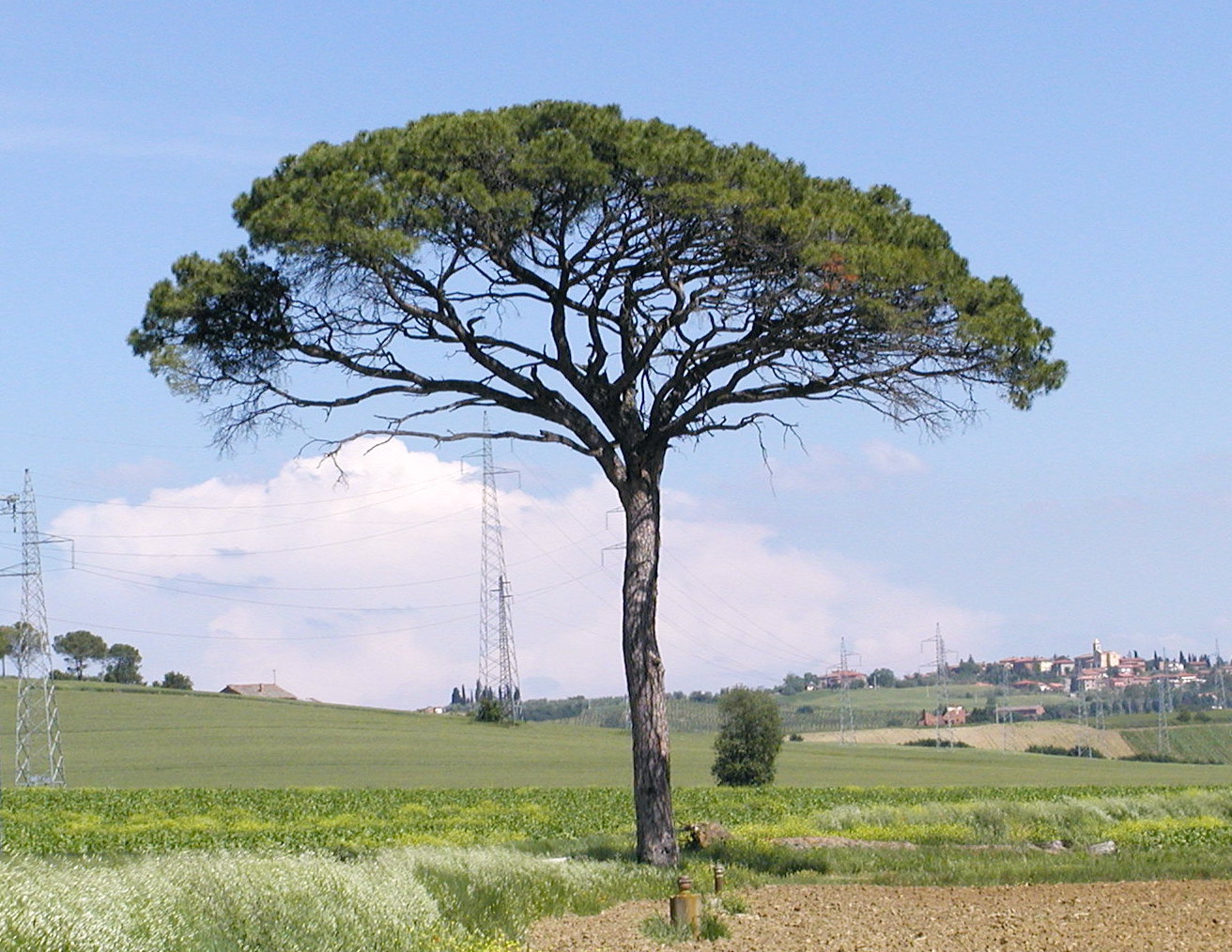
Lean neath stone pine the pastor lies with his crook;

lying beneath
leaning? thin?

pine tree (tree/stone)

stone pine
French slang: pine: penis

pastoral

crook = shepherd's or bishop's


young pricket by pricket's sister nibbleth on returned viridities;

slang prick: penis
pricket: buck in second year


by = beside

pricket's sister: female fallow deer also in 2nd year (but the term doesn't imply any literal brother)

archaic viridity: greenness (ie, green vegetation)

virility?


amaid her rocking grasses the herb trinity shams lowliness;

a maid
amid

"her" = the 'sister'?

rocking = shaking in breeze?
lookingglasses? so, Alice??

timothy grass?

shamrock
Saint Patrick said to have used the shamrock to explain the Trinity

to sham lowliness = false humility?

(semicolons are rare)


skyup is of evergrey.

'sky up' in falconry, of prey when flushed = to fly straight upward.
skiep = sheep (West Frisian)
scope? landscape?

cf evergreen

cf FDV above: "Peaceably eirinical in grayquiet"


[next]


full pages: 34567891011121314151617181920212223242526272829


FW 1.27c --Quinet paraphrase--

1.27a: Now after all that farfatch'd and peragrine or dingnant or clere lift we our ears, eyes of the darkness...
1.27b: Lean neath stone pine the pastor lies with his crook; young pricket by pricket's sister nibbleth...
1.27c: Thus, too, for donkey's years. Since the bouts of Hebear and Hairyman the cornflowers...
1.27d: and, though for rings round them, during a chiliad of perihelygangs, the Formoreans...
1.27e: and Little on the Green is childsfather to the City (Year! Year! And laughtears!), these paxsealing...


[last] [fweb-toc] [fweet] [finwake] [theall] [pgs]

synopsis: pastoral scenery — flowers and battlefields


FDV: "Since the times of Hebear and Hairyman the [tulipair][tulips]{twolips} amass themselves at Rush the cornflowers have been staying at Ballymun, the dogrose has chosen out Goatstown crossroads, the place for twilights and the whitethorn and redthorn have fairygayed the valleys of Knockmaroon and though, for rings round them during a hundred thousand yeargangs, the Formoreans have brittled the Tooath of the Danes and the Oxmen have been pestered by the Firebugs & the Joynts have given up wallmaking & Little on the Green is childsfather of the city, their paxsealing buttonholes have quadrilled across the centuries and here now whiff to us fresh & [laid]{maid}-of-all-smiles as on the day of combat." →
"Since the high old times of Hebear and Hairyman  the cornflowers have been staying at Ballymun, the duskrose has choosed out Goatstown crossroads, twolips have pressed togatherthem by sweet Rush, townland of twinlights, the whitethorn and redthorn have fairygayed the mayvalleys of Knockmaroon and though, for rings round them during a hundred thousand yeargangs, the Formoreans have brittled the Tooath of the Danes and the Oxman has been pestered by the Firebugs & the Joynts have thrown up wallmaking & Little on the Green is childsfather of the city, these paxsealing buttonholes have quadrilled across the centuries and here now whiff to us fresh & made-of-all-smiles as on the day of Killallwhoo."

Joyce is Wake-ifying here a passage in French by Edgar Quinet that he thought the most perfect prose ever, and that he'll later (p281) quote almost exactly in the original French: "Today as in the time of Pliny and Columella the hyacinth disports in Wales, the periwinkle in Illyria, the daisy on the ruins in Numantia and while around them the cities have changed masters and names, while some have ceased to exist, while the civilizations have collided with each other and smashed, their peaceful generations have passed through the ages and have come up to us, fresh and laughing as on the days of battles."

Thus, too, for donkey's years.

VI.B1.144: 'donkeys years since'
The Leader 15Mar24: 'S' donkey's years since I've had a yap with you old man'
phrase donkey's years: a very long time

ass motif [fweet-120] often associated w/Mmlj


Since the bouts of Hebear and Hairyman

bouts = battles
bouts (French) = extreme ends
French slang: bout: penis

he-bear
Heber and Heremon: legendary brother-progenitors of the Irish race

Genesis 27:11: 'Esau my brother is a hairy man'


the cornflowers have been staying at Ballymun,

cornflowers
"staying" EQ uses 'plaire' for all three flowers, not 'rester' or 'choisir'

Ballymun: district of Dublin
Dublin suburbs: Rush (far northeast), Ballymun (near north), Goatstown (near south), Knockmaroon (far southwest)


the duskrose has choosed out Goatstown's hedges,

dog-rose

musk-rose
('chewed out' is later slang for tonguelashing)

goats chew roses/hedges? (roses chew goats' hedges?)
Goatstown: district of Dublin

FDV: "chosen out Goatstown crossroads"


twolips have pressed togatherthem by sweet Rush, townland of twinedlights,

tulips

"pressed" exerted pressure on who? to gather them

together

sweet rush
Rush: village, County Dublin, noted for its tulip cultivation (nicknamed 'Holland in Ireland')

cf above: "his rushlit toofarback for messuages"

townland: Irish division of land, size very variable

twilight

FDV: "the place for twilights"


the whitethorn and the redthorn have fairygayed the mayvalleys of Knockmaroon:

whitethorn
redthorn(?)
white and red

variegated
gayed

Moyvalley: town, County Kildare (on the Liffey river; from Irish Magh Bhealaigh: Plain of the Path)

Knockmaroon Hill, just west of Phoenix Park (also, a western gate of the park)


[next]


full pages: 34567891011121314151617181920212223242526272829